
What the Foreclosure Headlines Aren’t Telling You About Today’s Housing Market
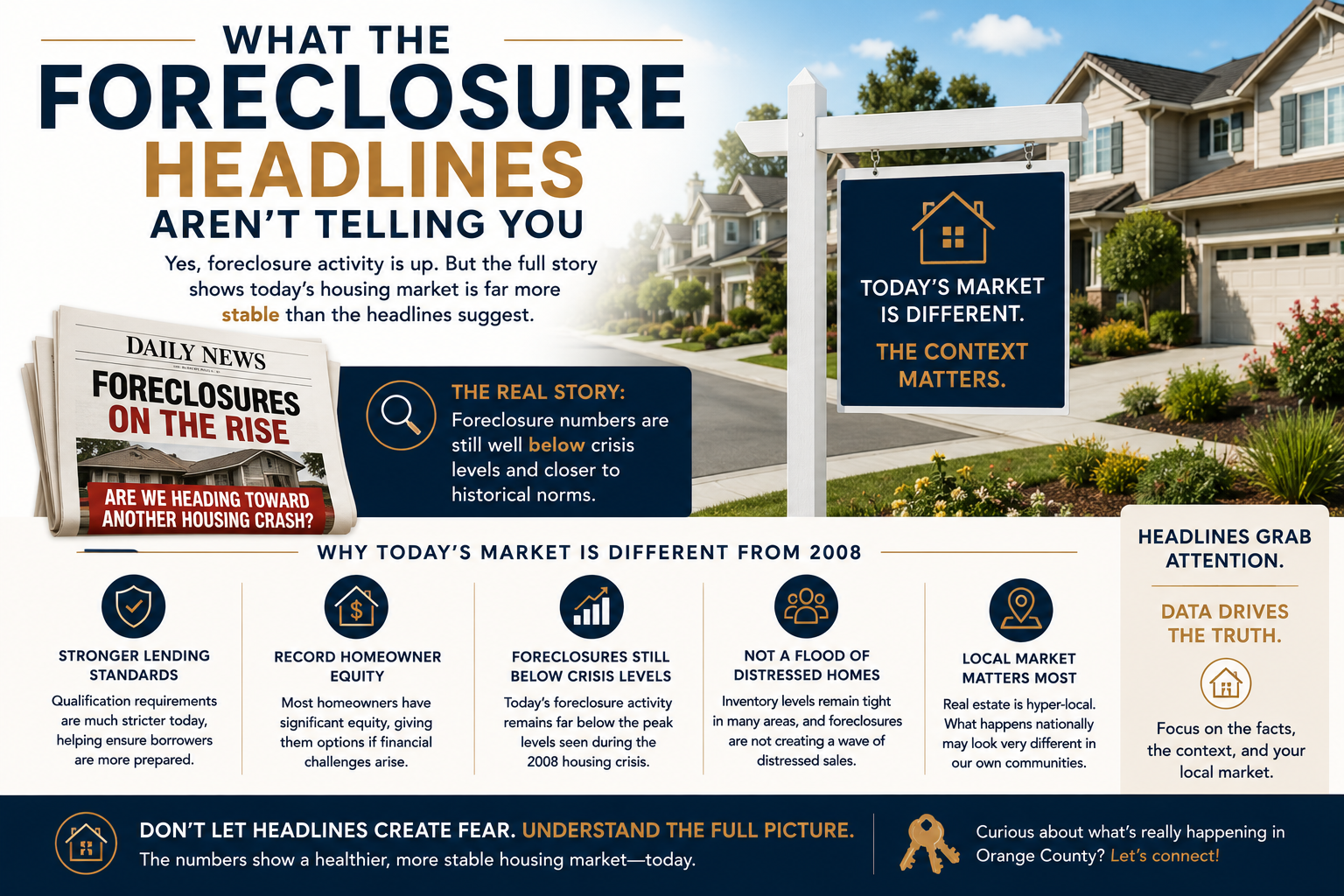
If you’ve seen recent headlines about rising foreclosures, you may have immediately thought:
👉 “Are we heading toward another housing crash?”
It’s a fair question — especially for anyone who remembers 2008.
But here’s what many headlines leave out:
💡 Today’s housing market is fundamentally different from the one that led to the last crash. And while foreclosure activity has increased slightly, the bigger picture tells a much more stable story.
📈 Yes, Foreclosure Activity Is Up — But Context Matters
Recent reports show foreclosure filings have increased compared to last year.
At first glance, that sounds alarming.
But percentages alone can be misleading without context.
According to housing data from ATTOM, foreclosure filings are still well below the levels seen during the 2008 housing crisis and are closer to what experts consider a more “normal” market.
In fact, much of today’s increase is simply the market normalizing after several years of historically low foreclosure activity during and after the pandemic.
That’s a very different situation from the widespread financial collapse seen in 2008.
🏠 Why Today’s Market Is Different From 2008
The last housing crash was fueled by several major issues:
- risky lending practices,
- unqualified borrowers,
- excessive inventory,
- and homeowners owing more than their homes were worth.
Today’s market looks very different.
✔ Lending Standards Are Much Stronger
Mortgage qualification requirements today are significantly stricter than they were before the last crash.
That means most homeowners currently have:
- verified income,
- stronger credit profiles,
- and more manageable loan structures.
✔ Homeowners Have Record Levels of Equity
One of the biggest differences today is homeowner equity.
Over the past several years, home values have risen substantially in many markets, including Orange County.
As a result, most homeowners now have a significant financial cushion.
That matters because homeowners facing financial hardship today often have another option:
🏡 selling their home before foreclosure becomes necessary.
In many cases, homeowners can still walk away with equity instead of being trapped in negative equity like many owners were in 2008.
📉 Foreclosure Numbers Are Still Below Historical Crisis Levels
Headlines are designed to grab attention.
But when you zoom out and compare today’s numbers to actual foreclosure crisis years, the difference is dramatic.
During the height of the 2008 housing crisis:
- foreclosure filings exceeded 1 million annually in some years.
Today’s levels remain far below those numbers and are closer to pre-pandemic norms.
That’s why many housing experts describe the current market as a “recalibration” — not a collapse.
📰 Why Headlines Often Sound Scarier Than Reality
Housing headlines often focus on:
🚨 percentage increases,
🚨 worst-case scenarios,
🚨 or fear-driven comparisons to 2008.
But markets are more nuanced than headlines suggest.
For example:
- foreclosure activity rising from historically low levels does not automatically signal a housing crash,
- and isolated distress does not equal widespread market failure.
That’s why understanding the full context matters.
🤝 What This Means for Buyers and Sellers
For buyers:
✔ today’s market still has tight inventory in many areas,
✔ lending remains more stable,
✔ and home equity levels continue supporting market strength.
For sellers:
✔ rising foreclosures are not currently creating a flood of distressed inventory,
✔ and properly priced homes are still attracting buyers in many markets.
While every local market is different, today’s conditions simply do not mirror the factors that created the 2008 crash.
📍 Why Local Market Knowledge Matters More Than Headlines
National headlines don’t always reflect what’s happening locally.
Real estate is hyper-local.
That means:
- inventory levels,
- pricing trends,
- buyer demand,
- and foreclosure activity
can vary dramatically from one city to another.
That’s why working with a knowledgeable local real estate professional matters — especially when media headlines create confusion.
🔑 Bottom Line
Yes, foreclosure activity has increased modestly.
But the data shows today’s housing market is still far healthier and more stable than the market leading up to 2008.
Strong homeowner equity, stricter lending standards, and limited inventory continue to support housing stability in many areas.
So while headlines may sound dramatic…
👉 the full story paints a very different picture.
📍 Curious about what’s really happening in the Orange County housing market?
I’d love to help you understand the trends, separate fact from fear-driven headlines, and create a strategy that fits your goals.
📩 Let’s connect.
Categories
Recent Posts








GET MORE INFORMATION

Agent License ID: 02210864
27758 Santa Margarita Pkwy, #224, Mission Viejo, California 92691, USA